

about a month ago, i sat down at one of my favorite cafés in LA with one simple note in my phone:
artist talk????? 7/31.
my friends at sip & sonder had given me an incredible opportunity — not only to showcase my art for the full month of july, but also to host an artist talk to close out the show. i’d been to plenty of these talks before, and the setup was always the same: the artist and a moderator sitting at the front, talking to each other while the audience watched from a distance, only chiming in during the q&a at the end.
i knew i didn’t want to go that route. foster the studio was founded on the principle of integrating art into the everyday —
so how could i bring that vision into my artist talk?
the show: chain reactions
before i go further, some background.
definition: a chain reaction describes how one action, idea, or event sparks others, creating a ripple effect that grows over time.
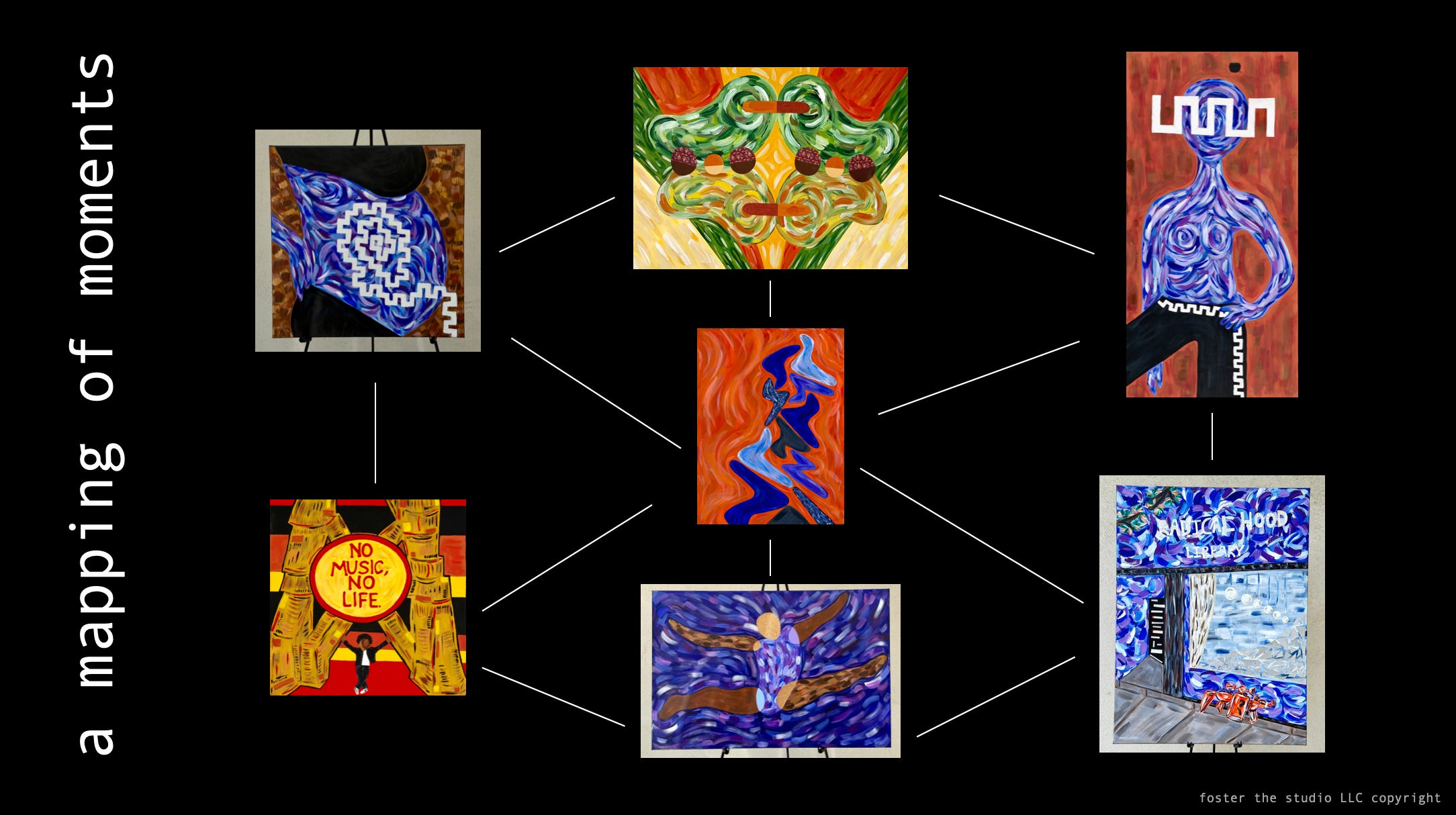
playing with that idea, chain reactions took a systems-driven approach to resistance and liberation. timely with recent protests and upheaval in LA, the show mapped a series of moments that built on each other — telling a collective story of liberation, rather than focusing on isolated ruptures.
this systems approach was meant to:
prove that liberation is active, spanning past, present, and future.
build faith that all is not lost — that something is happening, even when unseen.
the show consisted of seven pieces that together formed a living narrative. but after several visits to sip & sonder, i felt restless. the work was telling a story — but only on the walls. i wanted the audience to feel the deeper truths behind it.
how could i invite people to experience these chain reactions themselves?
how could i show that liberation is a living ecosystem?
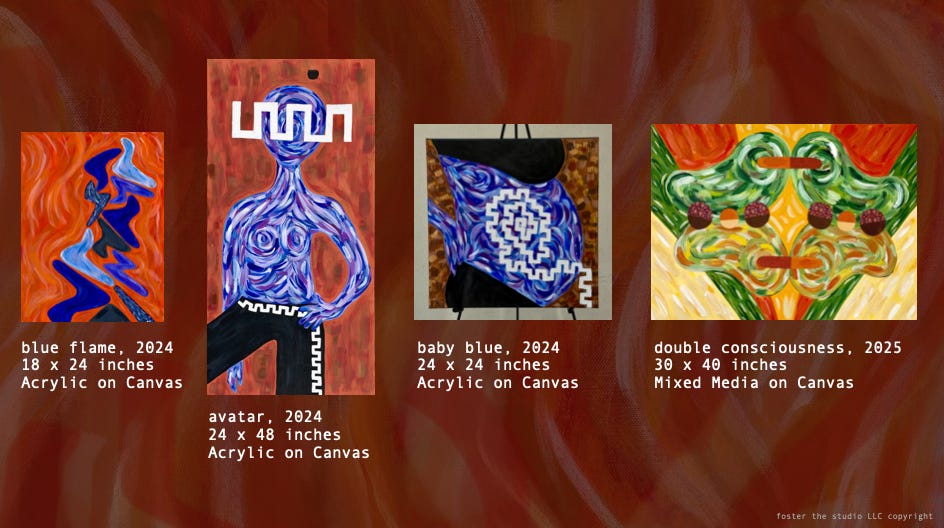
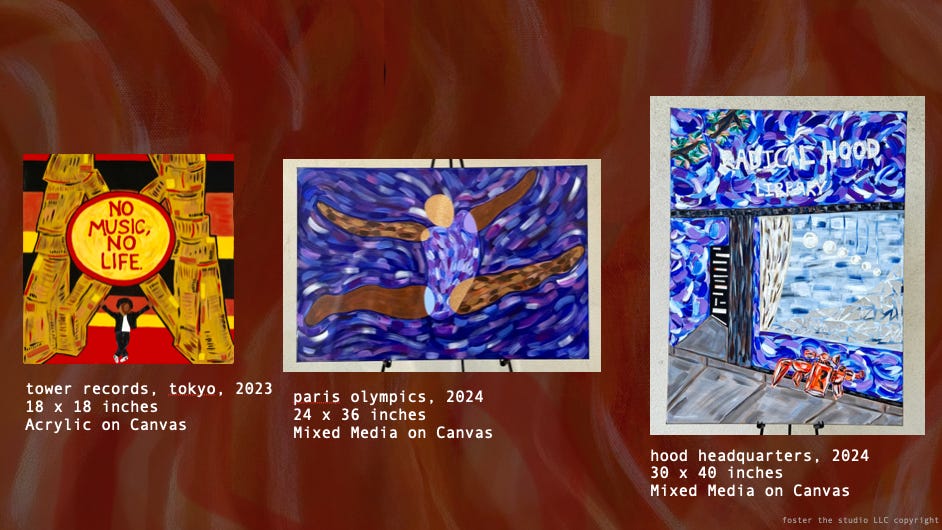
what emerged was part talk, part workshop: a space where people could step inside the framework of the work, interact with it, and carry something tangible back into their daily lives.
the workshop was broken into three parts:
part 1: getting to know the pieces
i opened with a theory: liberation is an ecosystem.
using the components of a biological ecosystem, i reframed each through the lens of liberation:
interdependent → freedom is not achieved alone. it lives in relationship — with ancestors, communities, the land, and the systems we move through.
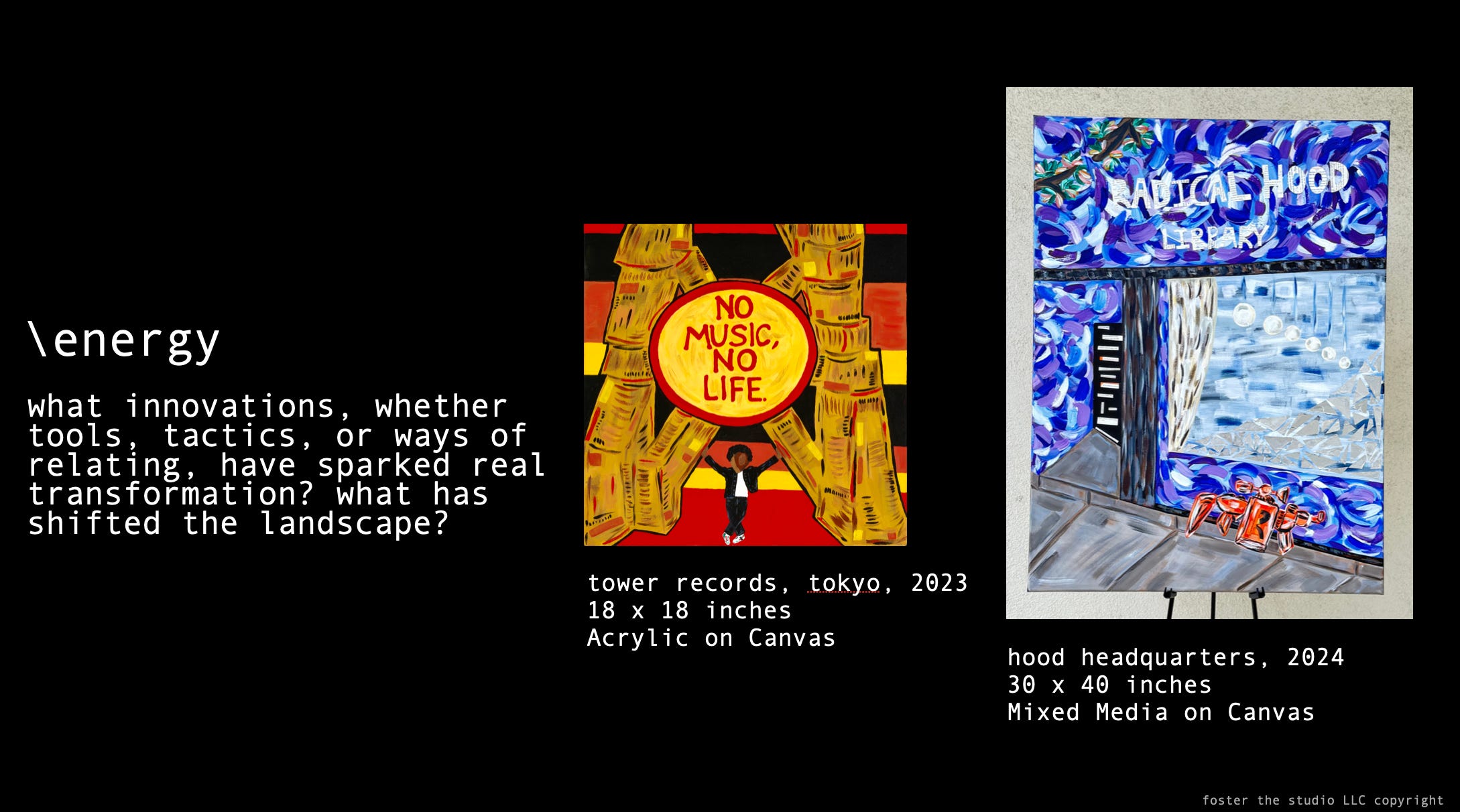
requires energy → fueled by love, rest, rage, creativity, and commitment. energy must be directed and sustained.
cyclic → honors the rhythms of change: death, rebirth, resistance, repair. trusts in the long arc of transformation.
adaptable → reshapes in response to oppression, innovates under pressure. liberation evolves.
requires diversity → thrives through multiplicity — of strategies, people, identities, and ways of knowing. diversity strengthens resilience.
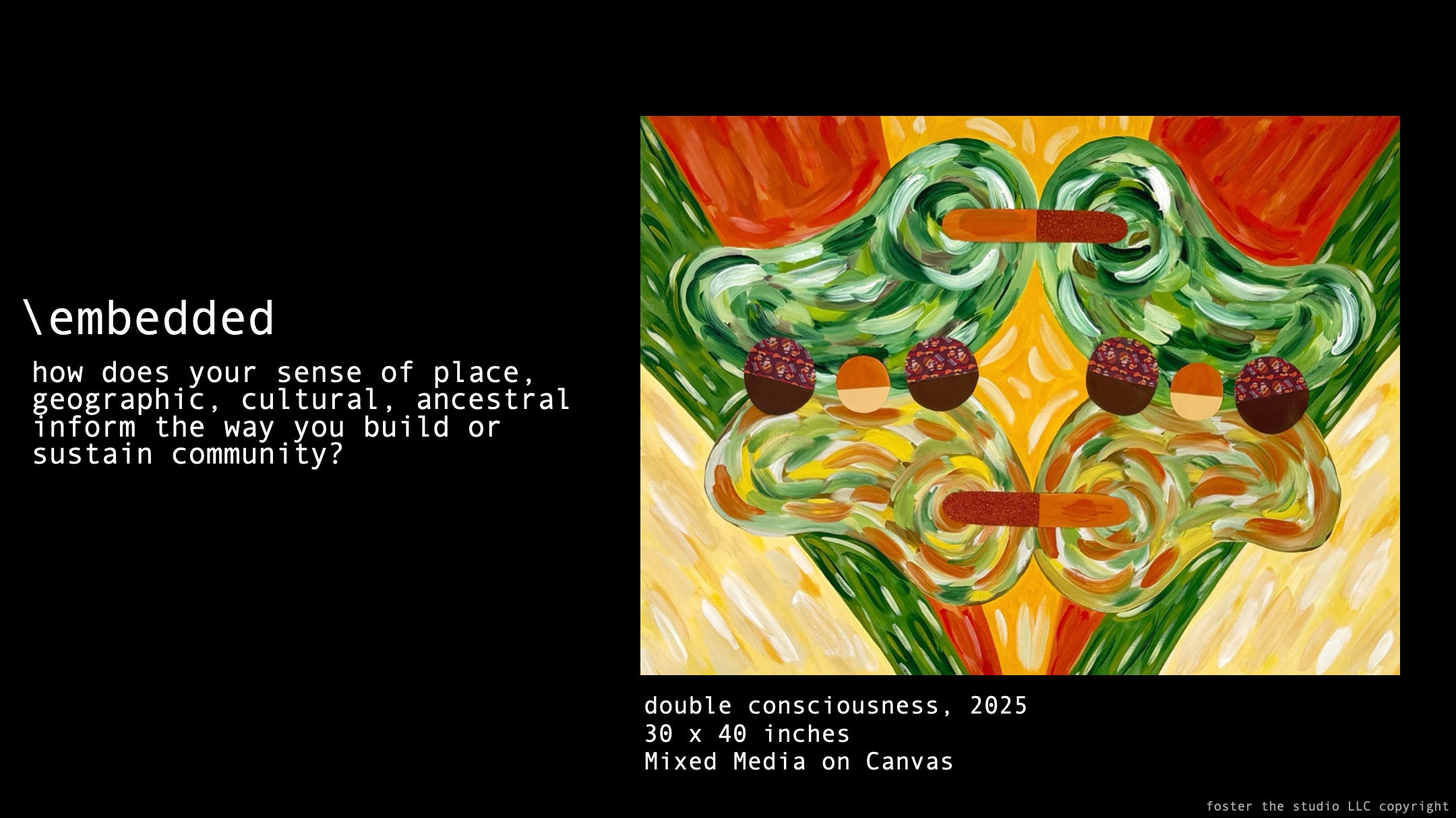
embedded in place → shaped by geography, culture, and history. must be rooted in land and bodies.
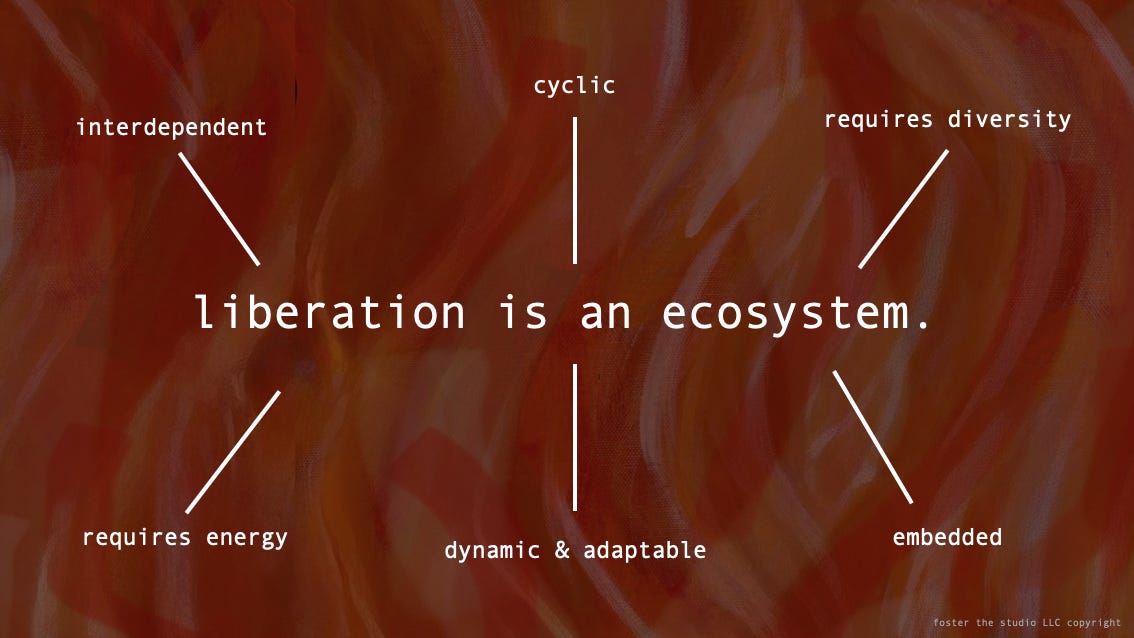
after walking through these definitions, i connected each to the seven pieces in chain reactions. then, i invited the audience to see the work through that framework, imagining how these moments might interlock into a self-sustaining ecosystem of change.


part 2: call & response
as i guided everyone through the slides, something shifted. people began answering questions without hesitation, offering longer reflections, building on each other’s thoughts. i sat behind them, ushering the conversation like a current, and the space became warm, alive, shared.


part 3: creating together
for the final exercise, i split everyone into groups of six, each assigned one ecosystem node:
interdependence
cyclic
diversity
energy
adaptability
embedded
armed with 11x14 craft paper and colorful markers, each group set out to create a visual representation of their node. the room filled with chatter and color — like kids in art class again.
people flowed between structured discussion and free drawing. the inner child and the inner researcher came alive, each group forming its own mini chain reaction.
after 20 minutes, one person from each group presented their piece. without being asked, they shared the stories behind their drawings, referenced the earlier slides, and reflected on their process.
when all six were done, i lined the drawings up to recreate the original “liberation is an ecosystem” map. together, we had researched, experimented, and arrived at our own theory. participants had become co-creators and catalysts.

that night, i saw what happens when art moves beyond walls and into the hearts of a community.
foster the studio is my commitment to that process — mapping patterns, researching ideas, and creating spaces where transformation unfolds in real time. the artist’s role isn’t just to make, but to invite others into the making.
liberation, like art, is an ecosystem, always evolving, always expanding. i want foster the studio to be a place where that evolution happens.


until the next field note — thank you for reading <3
—miela